
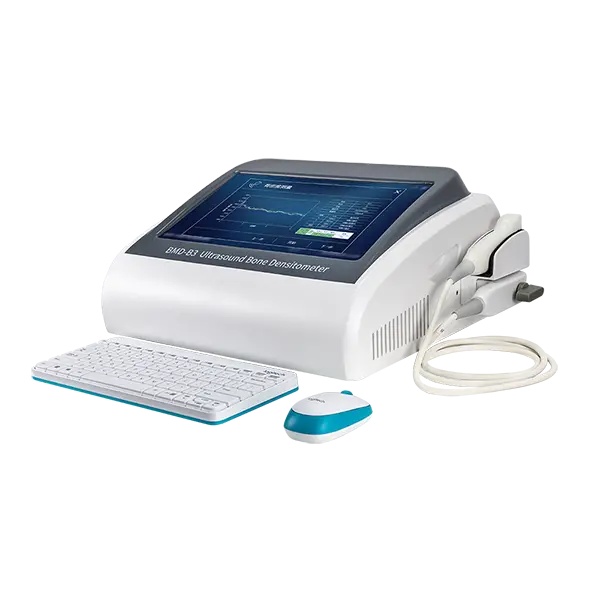
Automatic High Effective Portable Ultrasound Bone Densitometer BMD-B3
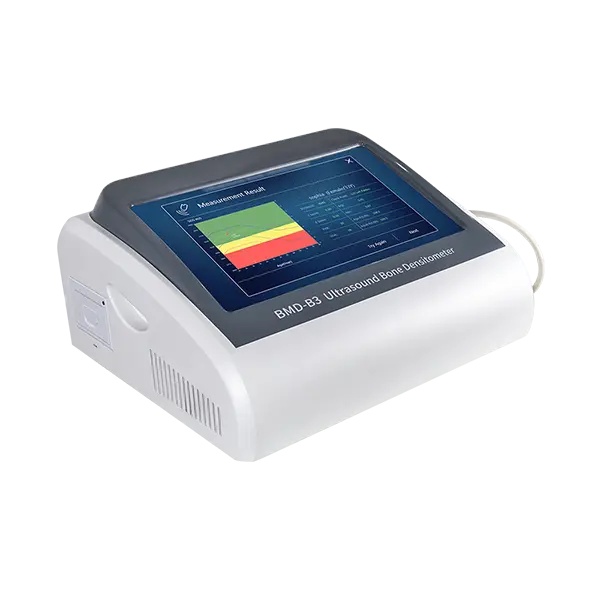


Technical features:
1. Using the full dry technology, makes diagnostic more convenient.
2. The probe adopt the Technology of the United States DuPont, makes the probe to receive higher sensitivity and better reception.
3. the better ultrasonic frequency on the measuring position, with better penetrability, more effective signal
4. Two probes: 1.20MHz Ultrasound Probe and 125MHz ultrasound probe are available
5. use the ultrasonic axial conduction technology, double emission and double receiving, it can provide more effective data
6. With innovative algorithm, effectively remove clutter and jamming signal, to get the valid data.
7. With a special correction system, to correct the system error effectively, get more accurate measurement results.
8. multipoint access mode with high shield and mold manufacturing, to ensure the lossless transmission of the ultrasonic signals.
9. it with multi race clinical database, including: European, American, Asian, Chinese, WHO international compatibility. It measuring the people between the age of 0 and 120.
9. English manual, Chinese (Traditional) manual
10. the first one pass EMC test
11. CE certificate.
12. ROHS certificate
13. LVD certificate.
12. ISO 13485, ISO 9001.
13. CFS Certificate.
14. CFDA Certificate
Performance parameter:
1. Measurement parts: radius and Tibia
2. Measurement mode: double emission and double receiving
3. Measurement parameters: Speed of sound (SOS)
4. Analysis Data: T- Score, Z-Score, Age percent[%], Adult percent[%], BQI (Bone quality Index ), PAB[Year] (physiological age of bone), EOA[Year] (Expected Osteoporosis age), RRF(Relative Fracture Risk). BMI , SOS
It has the functions of T value trend chart and Z value trend chart.
5. Measurement Accuracy : ≤0.25%
6. Measurement Reproducibility: ≤0.25%
7. Measurement time:
Three Cycles adults measuring time <15 seconds
Three Cycle Children measuring time < 3seconds
8. Probe frequency : 1.20MHz ,DuPont Technology
9. Automatic determination of measurement results
10. The text template has an automatic addressing function, which is convenient for report editing
11. It has a report statistics function
12. It has a medical record name correction function
13. It has reexamination function
14. It has a one-button Chinese-English conversion function
15. It has a fast and slow measuring function
16. Date analysis : it adopt a special intelligent real –time data analysis system, it selects the adult or child databases according to the age automatically .
17. Temperature control: Perspex sample with temperature instructions
18. Probe measurement navigation: this equipment display the Axial angle , the Horizontal Angle , the Direction Angle between the probe and the bone plane, it display the change of the real-time angle data. It is easy to correct the measure angle quickly, improving the measure speed , improving the data Accuracy.
19. Probe crystal indication: it display the working condition for the four crystal of the probe, and the signal strength for the ultrasonic reception.
20. Daily Calibration: automatic calibrating after power on.
21. All the people of the world. It measuring the people between the age Of 0 and 120,(Children: 0-12 years old, Teenagers: 12-20 years old, Adults:20-80 years old, The Elderly 80-120 yeas old, only need to input the age and recognizing automatically .
22. Temperature display calibration block: the calibration with pure copper and Perspex, the calibrator display current temperature and standard SOS. The equipment leave the factory with Perspex sample.
23. report mode: color report or report which printer by thermal printer
24. Report format: supply A4, 16K , B5 and more size report
25. Printer: two type to choose, one is Color inkjet Printer, another is Build in Thermal Printer
26. Portable model, with probe holder
27. Computer configuration: QUAD CPU , RAM 4G , 128G Solid State Drive, wireless mouse
28. Bone densitometer probe connector: multipoint access mode with high shield and mold manufacturing, to ensure the lossless transmission of the ultrasonic signals.
29. External medical special power supply, power>60W
30. Connect to the internet and provide remote services.
31. Monitor: 14.0’ color HD color LED monitor.
32. Fluid Protection: main unit waterproof level IP20, probe waterproof level IPX7
33. Main unit weight< 5 kgs, easy to carry
34. Added anti-interference ability
35. Environmental test complies with: GB/T14710-2009 requirements
36. Electromagnetic compatibility test complies with: YY0505-2012 requirements
37. Industry standard complies with: YY/T0774-2019 requirements
38. Electromagnetic compatibility test compliance complies with: YY9706.102-2
FAQs for BMD-A3 Ultrasound Bone Densitometer
1. The technical specs list an impressive measurement accuracy of ≤0.25%. What does this mean for clinical practice?
This high level of accuracy and reproducibility (also ≤0.25%) means the device provides extremely consistent and reliable data. It allows clinicians to confidently track even subtle changes in bone density over time, which is critical for monitoring treatment efficacy in osteoporosis patients or assessing bone growth in children. This precision makes it suitable not just for screening but also for meaningful longitudinal follow-up.
2. What is the advantage of having two probe frequency options (1.20MHz and 125MHz)?
Different frequencies have different penetration and resolution characteristics. A 1.20MHz probe offers deeper penetration, ideal for standard adult measurements. A hypothetical higher frequency probe (e.g., 125MHz would typically offer much higher resolution for near-surface imaging, but this spec may be a typo; 12.5MHz is more common for detailed peripheral imaging). This optionality allows for potential application-specific optimization, though the standard 1.20MHz DuPont probe is perfect for routine radial/tibial BMD assessment.
3. How do the "Probe Measurement Navigation" and "Probe Crystal Indication" features work to improve my results?
These are real-time operator guidance systems. Navigation displays live angles on screen, guiding you to position the probe perfectly perpendicular to the bone, ensuring standardized measurement geometry. Crystal Indication shows the signal strength from each transducer element, confirming optimal skin contact and signal quality. Together, they eliminate operator guesswork, minimize technique-related errors, and guarantee that every reading is taken under ideal, repeatable conditions.
4. What are the practical benefits of the "Full Dry Technology" and the probe's IPX7 waterproof rating?
Full Dry Technology uses a disinfectant spray instead of gel, making cleanup instantaneous and improving hygiene. Combined with the probe's IPX7 rating (can be immersed in water up to 1 meter for 30 minutes), it allows for thorough and rapid disinfection between patients using clinic-grade wipes or rinsing, which is a crucial infection control advantage in high-throughput settings like physical examination centers.
5. The device offers T-score and Z-score "Trend Charts." How is this function useful?
Trend charts are a powerful patient management tool. By visually plotting a patient's scores over multiple visits on a graph, you can clearly demonstrate to the patient whether their bone density is stable, improving with treatment, or declining. This enhances patient understanding, adherence to therapy, and provides you with an at-a-glance clinical overview of their long-term bone health trajectory.
6. What does the "Re-examination Function" entail?
This function allows you to easily retrieve a past patient's record and conduct a new test, with the system automatically linking the new data to their history. This streamlines the workflow for follow-up appointments, making comparative analysis and trend chart generation fast and seamless, thereby improving clinic efficiency for chronic disease management.
7. With a computer configuration of Quad CPU, 4GB RAM, and 128GB SSD, is this device future-proof?
This industrial-grade computing specification ensures the system operates smoothly, handles data analysis and real-time graphics (like navigation angles) without lag, and provides ample storage for thousands of patient records. It guarantees fast boot-up, quick report generation, and long-term reliability in a demanding clinical environment, protecting your investment.
8. The "Connection to the internet and provide remote services" is mentioned. What services does this enable?
This connectivity can support remote diagnostics and technical support from the manufacturer, potentially reducing downtime. It may also facilitate secure data backup or allow for software updates to be delivered online, ensuring your device always has the latest features and database improvements without needing physical media.
9. The device complies with YY/T0774-2019 and YY9706.102. Why are these specific Chinese standards important?
YY/T0774-2019 is the specific Chinese industry standard for ultrasonic bone densitometers, ensuring the device's safety and performance meet national regulatory requirements. YY9706.102 is the Chinese standard for electromagnetic compatibility (EMC) of medical electrical equipment. Compliance guarantees the device will not interfere with, nor be affected by, other critical equipment in a hospital setting, which is essential for patient safety and operational reliability.
10. What is the significance of having both an ISO 13485 and a CFDA Certificate?
ISO 13485 is the international quality management system standard specific to medical devices, demonstrating that the manufacturer has a robust, compliant production process. The CFDA Certificate (now NMPA) is the mandatory market approval from China's medical device regulatory authority. Together, they provide dual assurance of both global quality system compliance and official approval for sale and use in the Chinese market, the highest level of credential for a device in this region.
11. The "Special Correction System" and "Daily Automatic Calibration" are highlighted. How do they maintain accuracy?
The system uses a dual approach. The Special Correction System is a sophisticated software algorithm that compensates for inherent system variances. The Daily Automatic Calibration physically verifies the system's baseline against a factory-calibrated Perspex/copper reference block each time it powers on. This combination of hardware verification and software correction ensures the device remains in a state of peak accuracy with zero daily effort from the operator.
12. The report can be generated by a color inkjet or a built-in thermal printer. Which is recommended and why?
The built-in thermal printer is ideal for portability and reliability—it has no ink to run out or smudge, is faster, and is integrated into the trolley. The color inkjet printer produces more vibrant, conventional A4 reports that some clinics prefer for filing. The choice depends on your primary need: ultimate mobility and hassle-free operation (thermal) versus traditional report aesthetics (inkjet). Many clients opt for the thermal printer for its practicality.
Popular Products
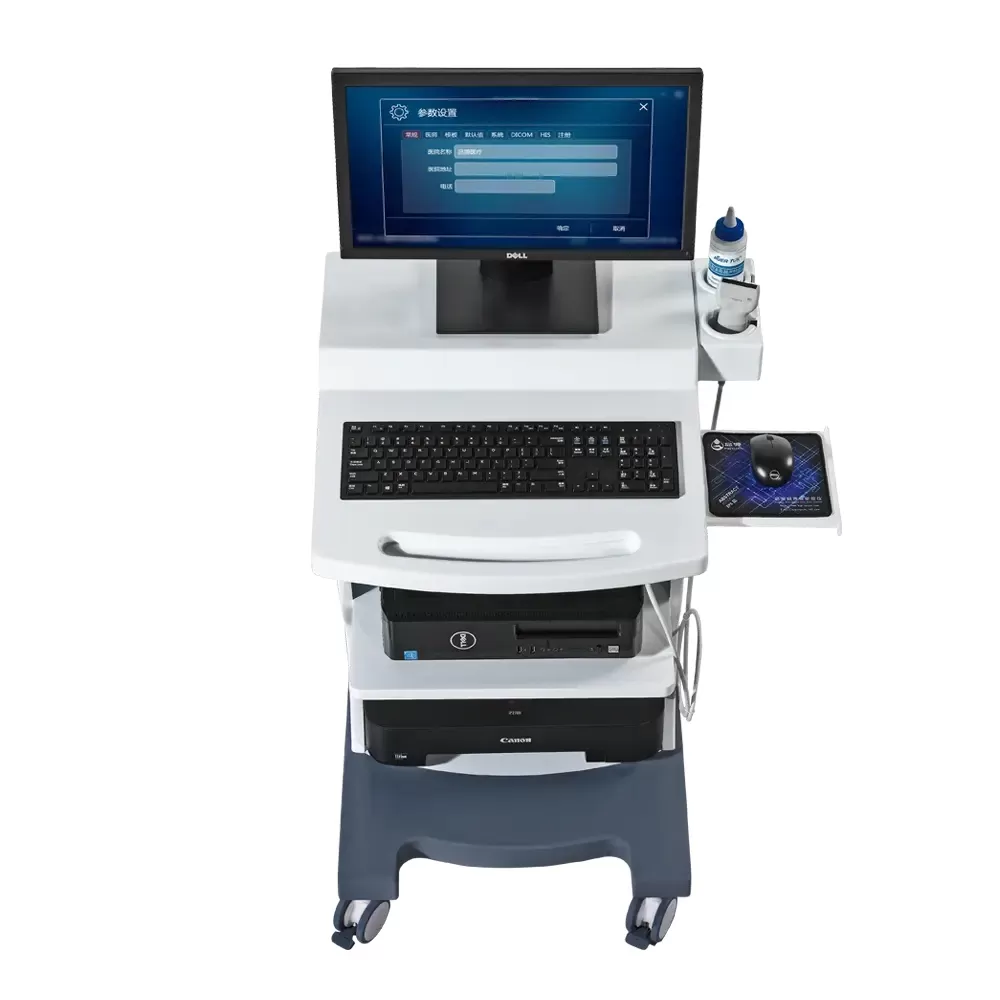
Ultrasound Bone Densitometer BMD-A1 Basic Osteoporosis Detector
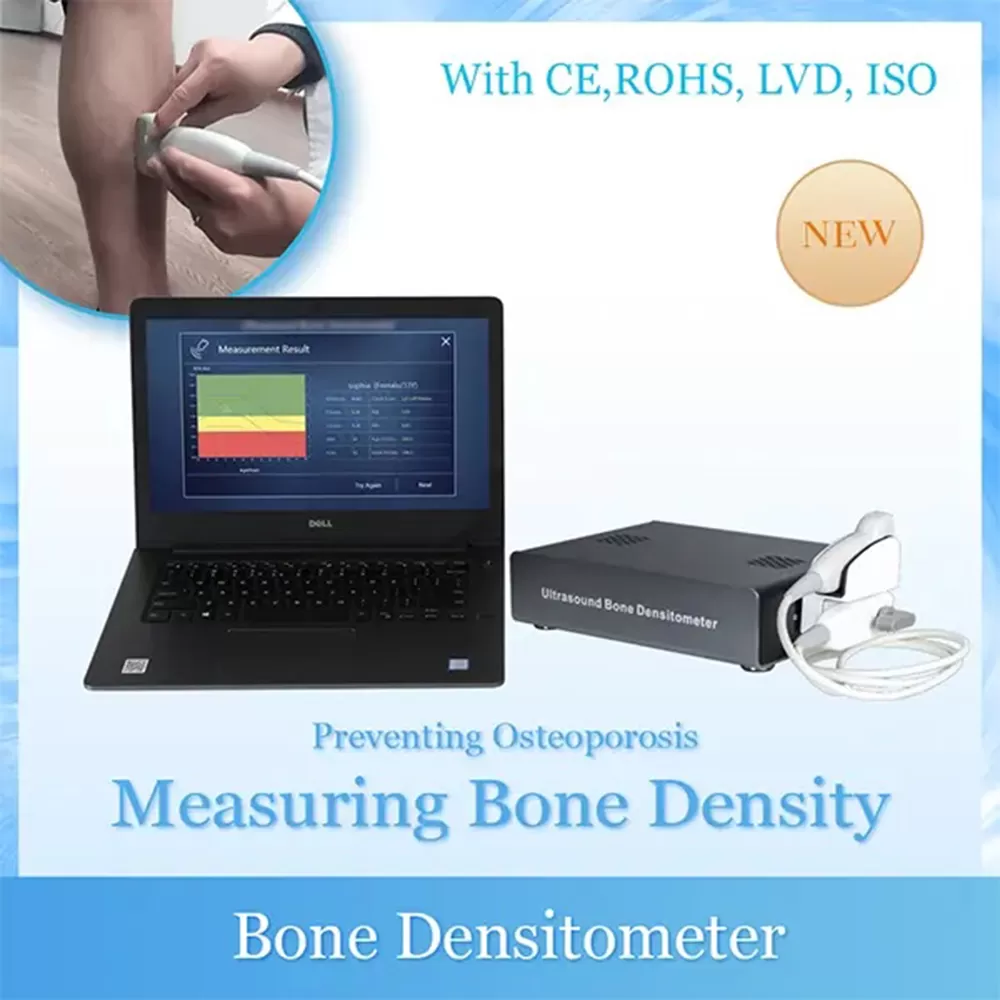
Portable Ultrasound Bone Densitometry BMD-A1 Osteoporosis Detector
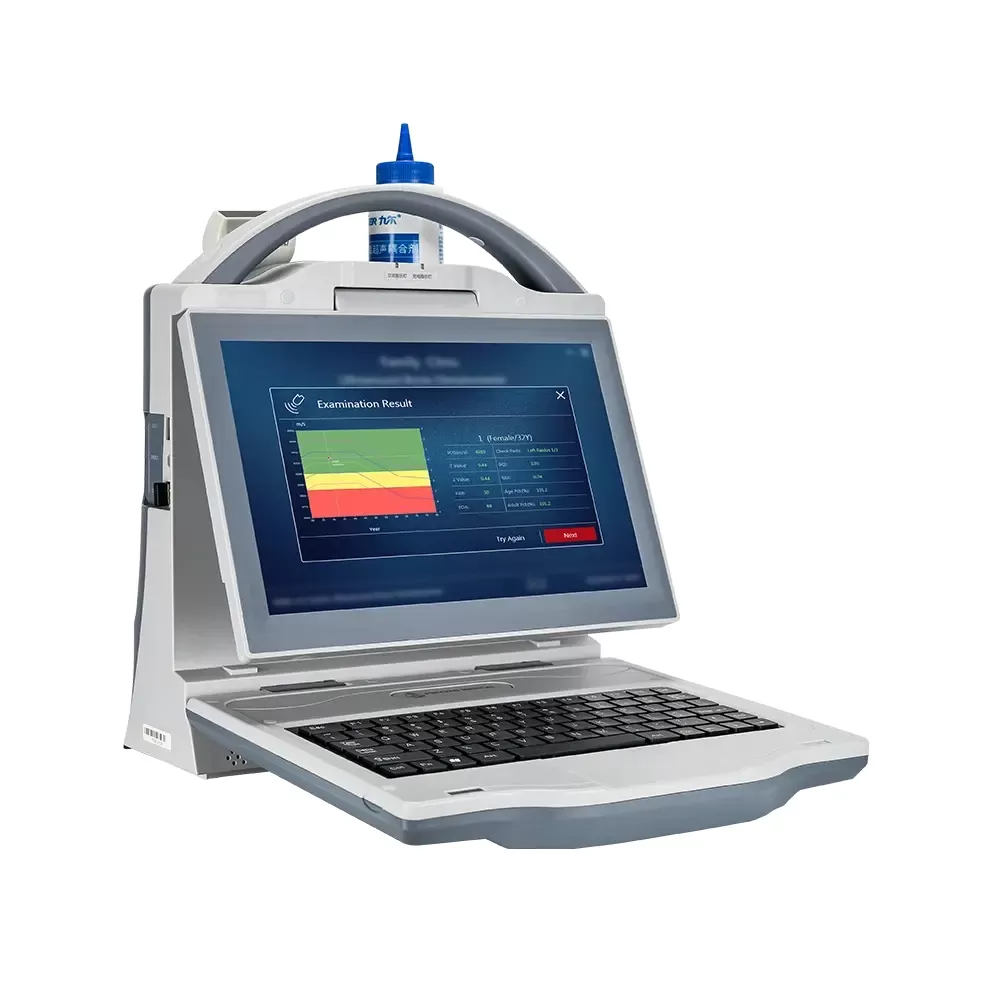
Portable Ultrasound Bone Densitometer BMD-A3
Automatic High Effective Portable Ultrasound Bone Densitometer BMD-B3
Portable Ultrasound Bone Densitometer BMD-C3
DXA Bone Densitometer 500A Dual-Energy X-ray Absorptiometry
Dual-Energy X-ray Bone Densitometer DXA-500B
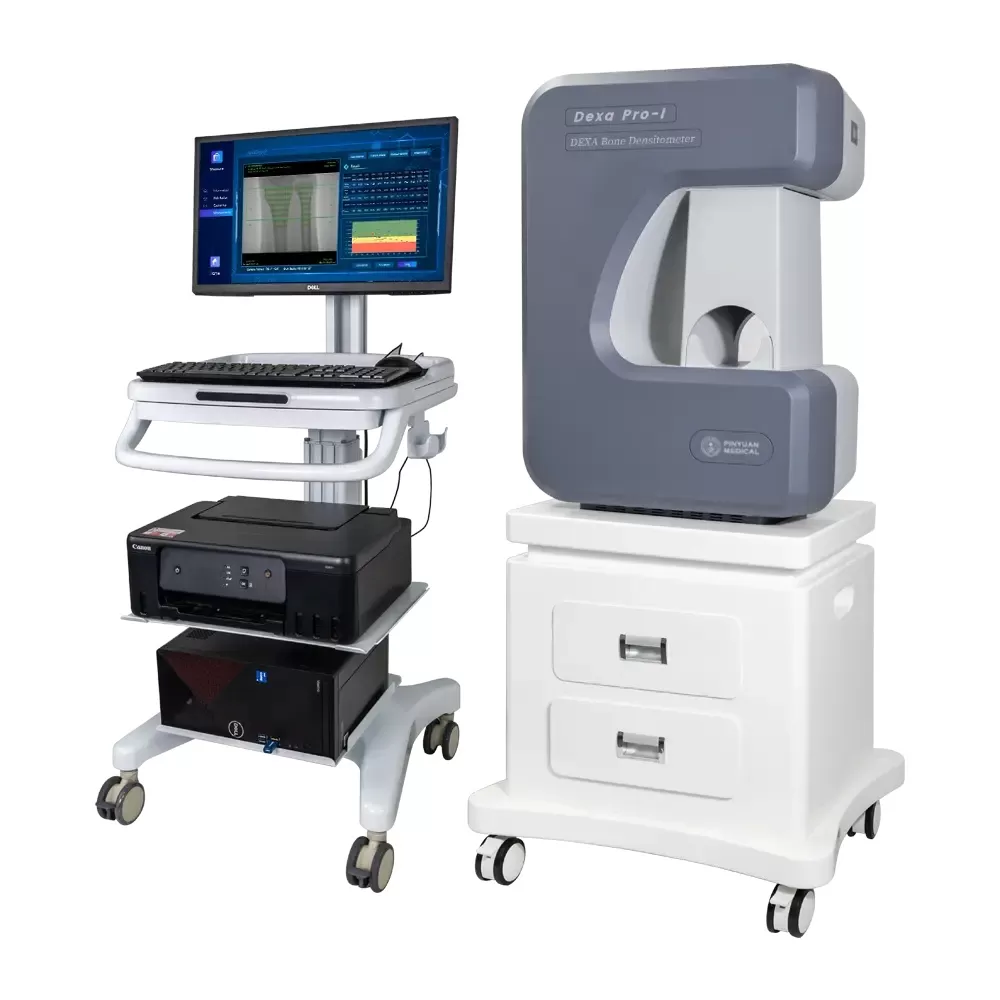
DXA Bone Densitometer DEXA Pro-1
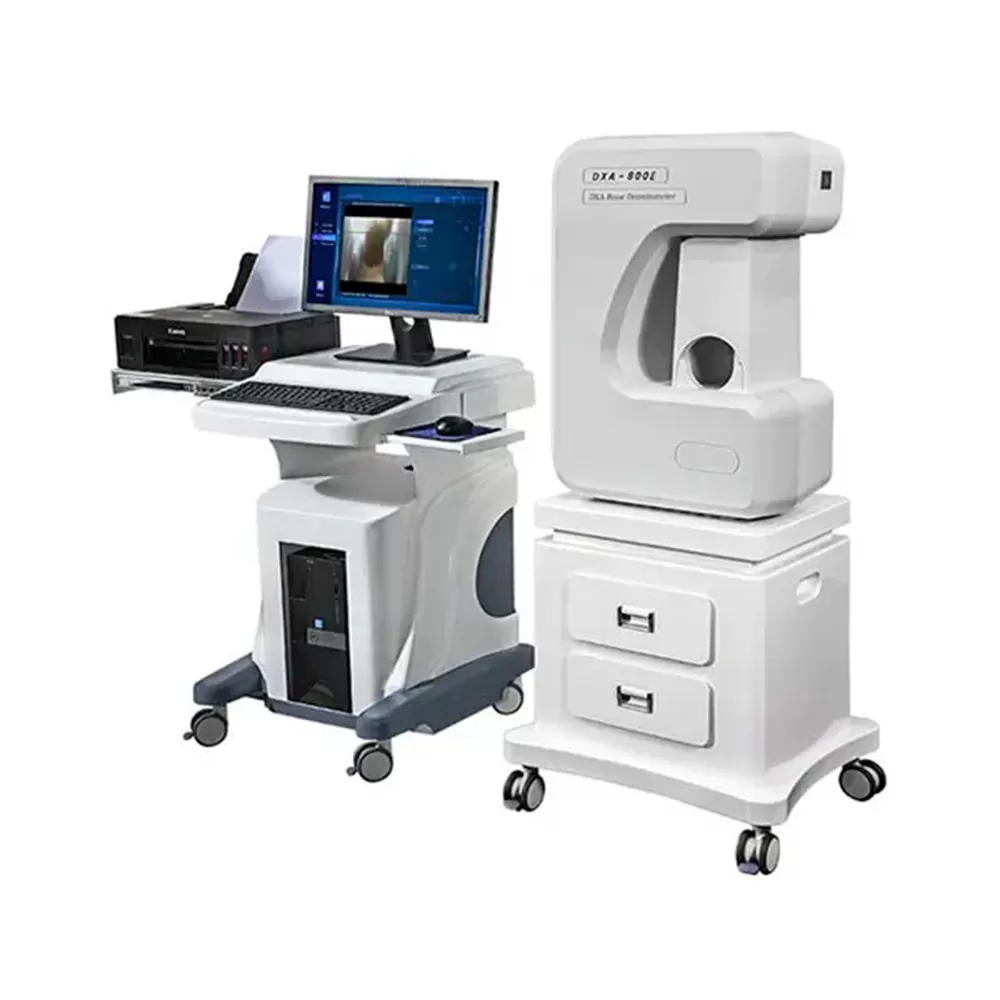
DXA Bone Densitometer 800E
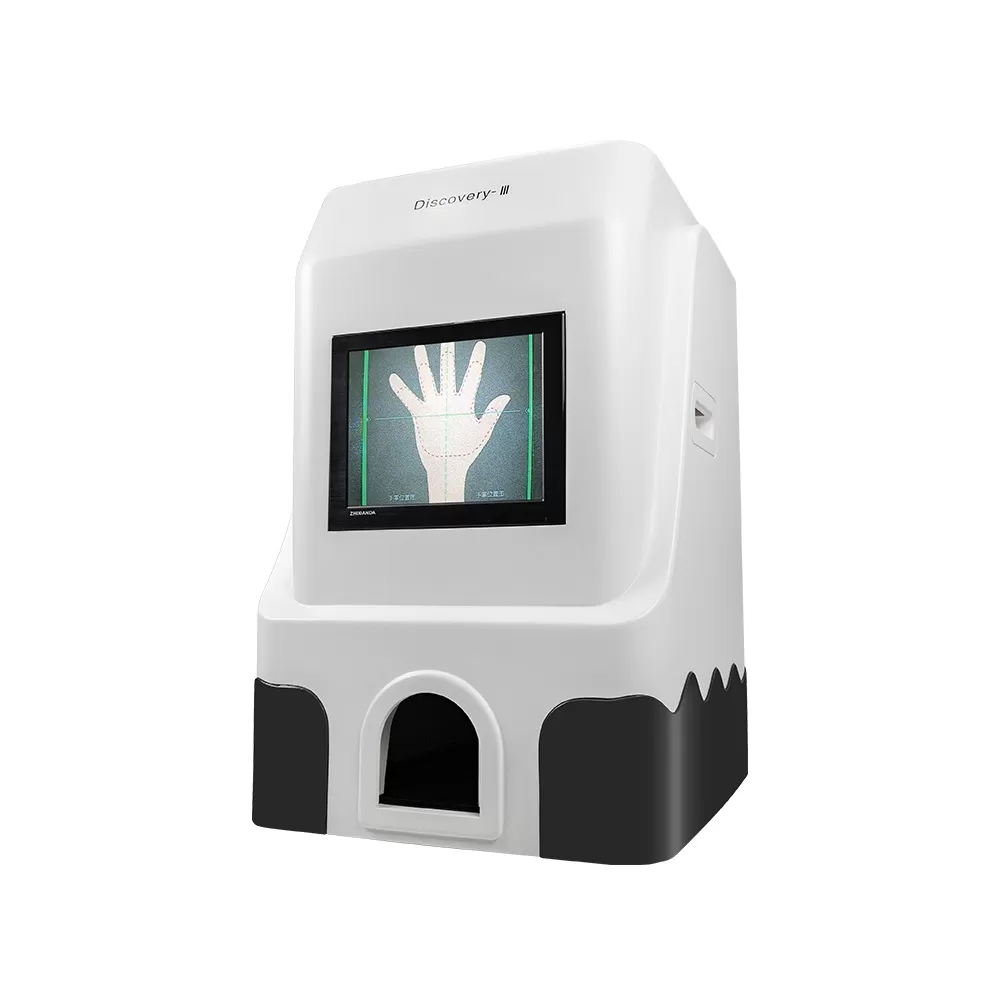
X-ray Bone Density and Skeletal Age Instrument Discover-lll