
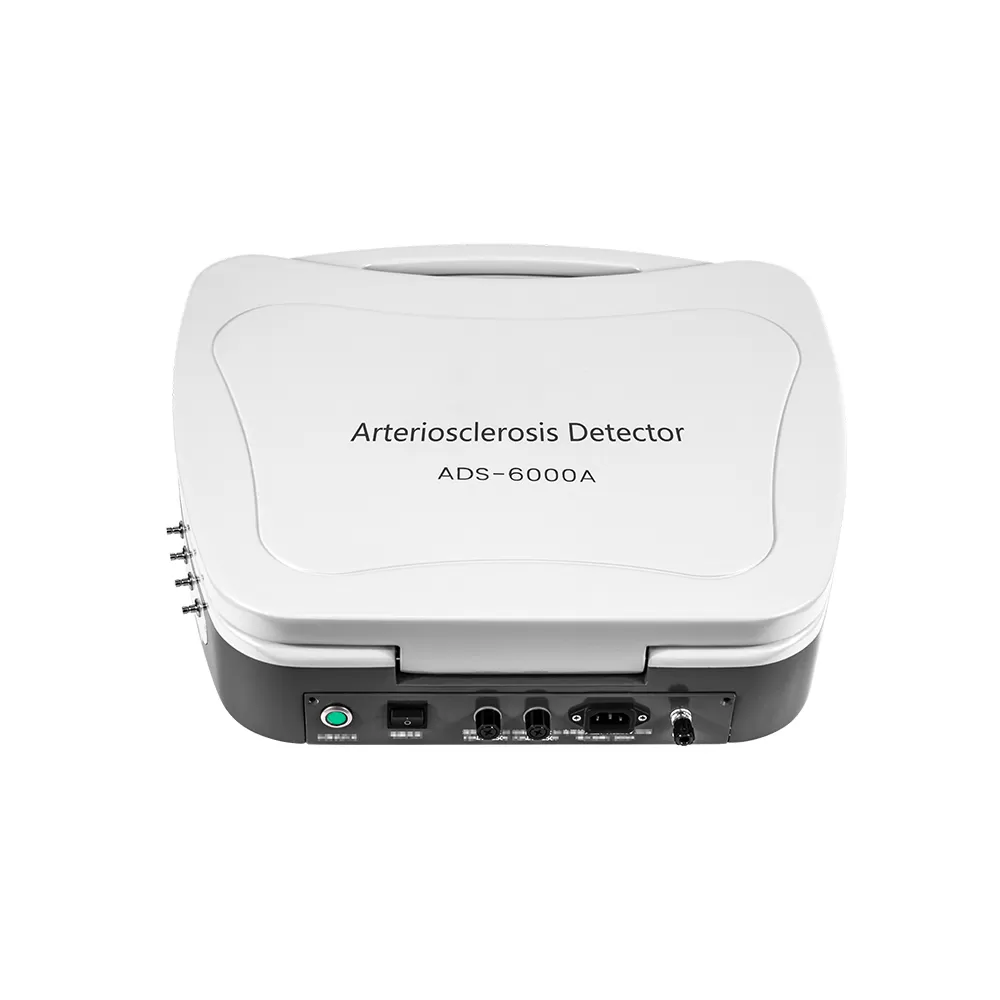
Arteriosclerosis Detector ADS-6000A Test Equipment

The most common causes of arteriosclerosis are hyperlipidemia, hypertension, diabetes, and the patient's own lifestyle. Relevant data show that the intake of greasy food and high-cholesterol food directly leads to hypercholesterolemia, and hypercholesterolemia is just one of the risk factors for atherosclerosis and cardiovascular disease.
For most patients with arteriosclerosis, early detection, early detection and reasonable intervention can effectively reduce the morbidity, disability rate and mortality of cardiovascular and cerebrovascular diseases.
ADS-6000A Technical parameters of Arteriosclerosis Detector
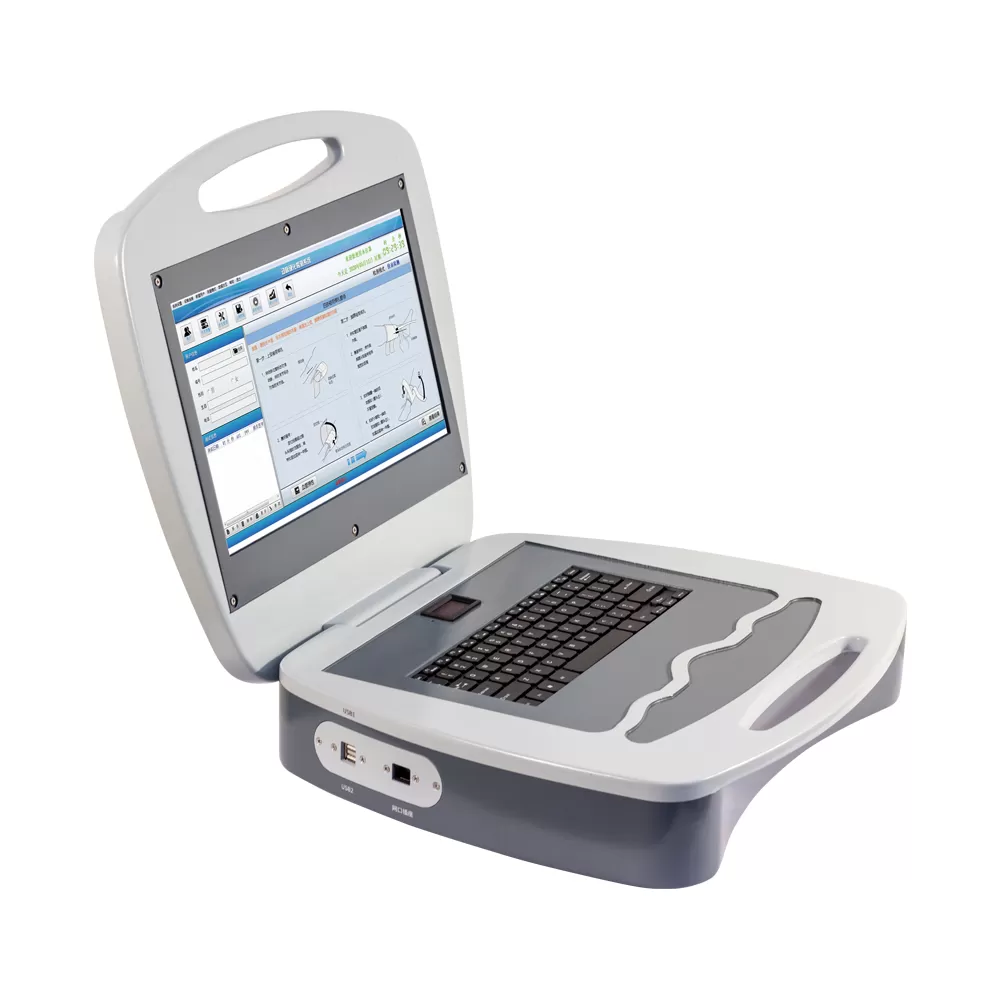
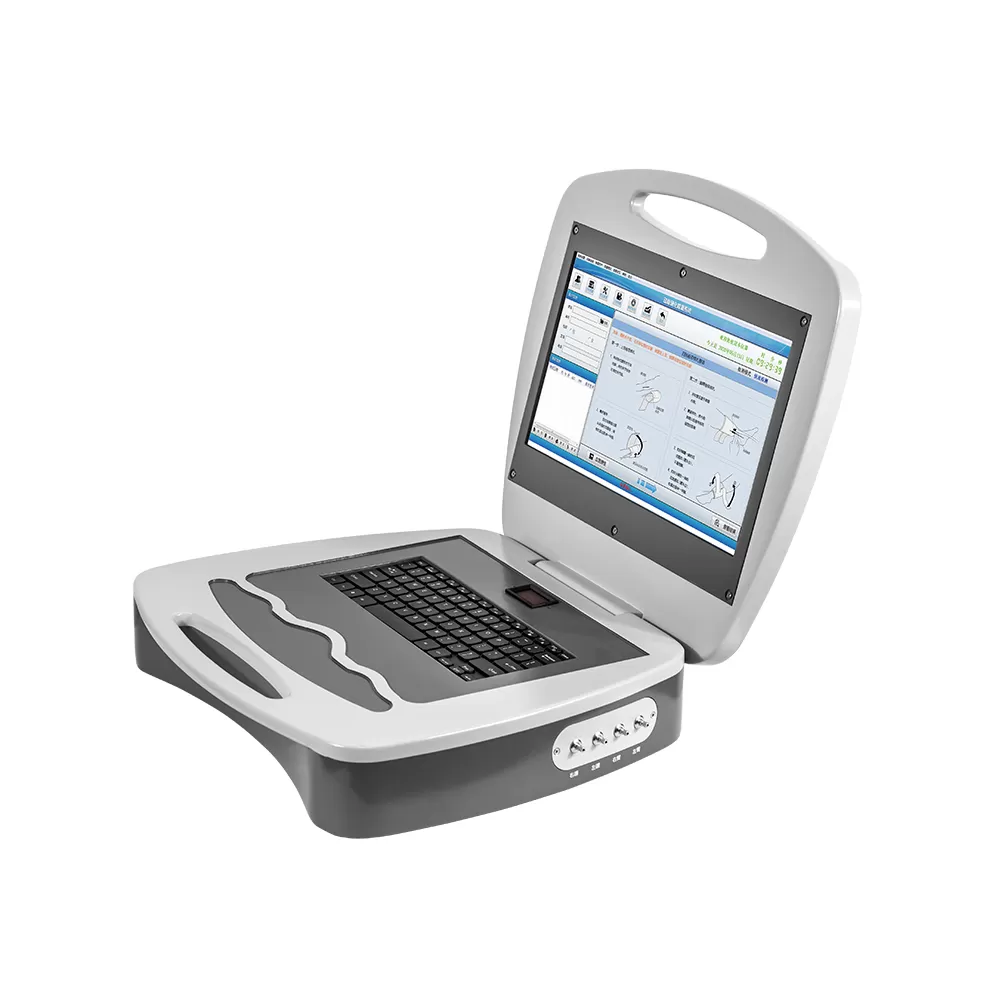
ADS-6000A Arteriosclerosis Detector is an arterial stiffness and obstruction degree detector with complete independent intellectual property rights. The instrument uses synchronous compression to measure the blood pressure of the limbs noninvasively, simultaneously records and analyzes the pulse wave shape of the limbs, uses waveform analysis technology to extract the characteristic information that characterizes the blood vessel elasticity, calculates a number of indexes including ankle brachial index (ABI), brachial ankle artery pulse wave velocity (baPWV), and performs automatic analysis and comprehensive evaluation through the database data, to evaluate the health status of cardiovascular system and the degree of lower extremity artery obstruction, and provide comprehensive objective basis for early diagnosis of arteriosclerosis and early screening of cardiovascular and cerebrovascular diseases.
Technical features:
1,Accurately assess the elasticity of the great arteries and the degree of lower extremity artery obstruction
The ankle-brachial index measured by synchronous compression of all limbs reduces the influence of blood pressure variability, and the results are more accurate, baPWV+ABI measurement is more reliable in assessing large artery elasticity.
2,Simple, fast, non-invasive measurement method, easy to complete the index measurement
The use of high sensitivity pulse wave sensor non-invasive inspection, will not bring any physical harm to the user. The instrument is simple to operate, the detection time is short, and the index measurement is completed quickly.
3,The network function can easily support online transmission and remote management of data.
4,Scientific theoretical basis and accurate test data
Independent intellectual property rights, years of medical data acuumulation, and passed clinical verification.
5,ABI was detected by synchronous compression of the limbs
Due to the constant fluctuation of blood pressure, only ABI values measured by simultaneous compression of the extremities are more meaningful. The 2006 ACC/AHA guidelines for the management of peripheral artery disease recommend the use of simultaneous measurement of blood pressure on all limbs to obtain ABI values.
6,Risk assessment of cardiovascular disease
The unique cardiovascular disease risk assessment system objectively assesses the 10-years risk of ischemic cardiovascular disease.
7,Network interaction and data upload function
The data can be batchly imported from the remote server, and the test data can be uploaded to the remote server at any time, and can be integrated with the health management system as needed.
8,Accurate blood pressure measurement: the quality and performance of the internationally renowned blood pressure monitoring module are more reliable and the measurement results are more accurate.
Technical parameters:
1,The blood pressure of the extremities was measured synchronously by the oscillometric method.
2,Measurement site: limbs: upper arm, lower limb ankle.
3,Arm circumference measurement range: 20-38cm.
4,The width range of lower limb measurement: 16cm-33cm.
5,Rated power: 115VA voltage 220V.
6,Performance requirements of blood pressure measurement:
Measurement range: 0kPa ~ 34.7kPa(0mmHg ~ 260mmHg);
Measurement accuracy: ±0.4kPa(±3mmHg);
Repeatability: measured under static continuous low pressure, the difference between the repeated measured readings at each point within the scale range is not greater than 0.533 kPa(4mmHg).
7,12.1 inch HD LCD screen, branded industrial control computer system.
8,Measurement parameters: baPWV (brachial-ankle pulse wave velocity), ABI (ankle brachial index), BAI (brachial-ankle index), HR(heart rhythm), PVR (pulse volume recording), systolic blood pressure SBP(limbs), diastolic blood pressure DBP(limbs), mean blood pressure MAP(limbs), pulse pressure PP(limbs).
9,Portable structural design, easy to move.
10,Equipped with lithium battery, capacity of 5200mAH.
11,Lithium battery working time up to 3 hours.
Frequently Asked Questions (FAQ) about the ADS-6000A Arteriosclerosis Detector
1. Q: What is the primary purpose of the ADS-6000A detector?
A: It is designed for the non-invasive and rapid assessment of arterial health. By measuring key indices, it aids in the early screening of arteriosclerosis, evaluating the risk of lower extremity arterial obstruction, and providing objective data for the prevention and management of cardiovascular and cerebrovascular diseases.
2. Q: Is the testing procedure painful or invasive?
A: No, it is completely non-invasive and painless. The process is similar to having your blood pressure taken on all four limbs simultaneously, using only cuff pressure and high-sensitivity sensors to capture pulse waves. It causes no physical harm.
3. Q: Why is "simultaneous four-limb" measurement necessary? What is the advantage?
A: Traditional sequential measurements can introduce errors due to natural blood pressure fluctuations. Simultaneous cuff inflation captures blood pressure data from all limbs within the same cardiac cycle. This makes the calculated Ankle-Brachial Index (ABI) more accurate and reliable, aligning with recommendations from international clinical guidelines (e.g., ACC/AHA).
4. Q: What do the two core indices, ABI and baPWV, signify?
A:
ABI (Ankle-Brachial Index): Primarily assesses potential stenosis or obstruction in the lower limb arteries. A low value typically suggests insufficient blood flow to the legs.
baPWV (Brachial-Ankle Pulse Wave Velocity): Primarily evaluates the stiffness of the large arteries. A higher value indicates reduced arterial elasticity and a greater degree of hardening.
5. Q: Who is the ideal user for this device?
A: It is particularly suitable for individuals with risk factors for arteriosclerosis, such as those with hypertension, hyperlipidemia, diabetes, as well as long-term smokers, obese individuals, and middle-aged/older adults with a family history of cardiovascular disease. It serves as an excellent tool for health check-ups and early risk screening.
6. Q: How long does a single test take?
A: The entire procedure is very swift. From cuff placement to comprehensive report generation, it typically takes only 3-5 minutes. The operation is simple and highly efficient.
7. Q: How is the "Cardiovascular Disease Risk Assessment" in the report generated?
A: The device incorporates a clinically validated risk assessment model. It analyzes your measured data (baPWV, ABI, age, blood pressure, etc.) in combination with its built-in database to objectively grade your 10-year risk of ischemic cardiovascular events (like heart attack or stroke).
8. Q: Can test data be saved, exported, and does it support networking?
A: Yes. The device features robust data management capabilities:
Local Storage: Test reports are automatically saved on the device.
Network Function: Supports batch uploading of data to a remote server or health management platform via wired or wireless connection, facilitating remote review, trend tracking, and file management by physicians.
9. Q: How is the measurement accuracy of this device ensured?
A: Accuracy is guaranteed through multiple measures:
Reliable Core Module: Uses internationally renowned blood pressure monitoring modules for accurate baseline measurements.
Proprietary Algorithm: Features independently developed waveform analysis technology.
Clinical Validation: Algorithms and parameters are verified against years of accumulated clinical data, ensuring scientific and credible results.
10. Q: Are there any body size requirements for the subject?
A: The device comes with cuffs of various sizes. It accommodates a wide range of adult body types, with an arm circumference range of 20-38 cm and a lower limb circumference range of 16-33 cm.
11. Q: Is it a desktop or a portable device?
A: The ADS-6000A features a portable design and includes a high-capacity rechargeable battery, providing approximately 3 hours of continuous operation on a full charge. This allows for flexible use not only in fixed clinic settings but also for mobile applications across different departments, community screenings, or mobile examination vehicles.
12. Q: What kind of training and support does the manufacturer provide after purchase?
A: We offer comprehensive pre-sales and after-sales support, including:
Operation Training: Detailed user manuals and on-site/online training sessions.
Technical Support: A dedicated customer service team for technical consultations and troubleshooting.
Software Updates: Potential updates to the assessment algorithms or database based on medical advancements.
13. Q: What are the operational environment requirements for this device?
A: A standard clinic environment is sufficient. The device operates on 220V AC power and can also run on battery. For optimal signal stability, testing is recommended in a quiet, temperature-controlled environment.
14. Q: Can the test results replace hospital examinations like vascular ultrasound or angiography?
A: The ADS-6000A is an excellent screening and risk assessment tool. Its value lies in early risk detection and abnormality indication. It is not a substitute for definitive diagnostic imaging standards like CT angiography or Doppler ultrasound. If results are abnormal, patients should be advised to consult a specialist for further diagnostic testing with their report.
