
Pulmonary Function Tester LUD-V1 COPD screening

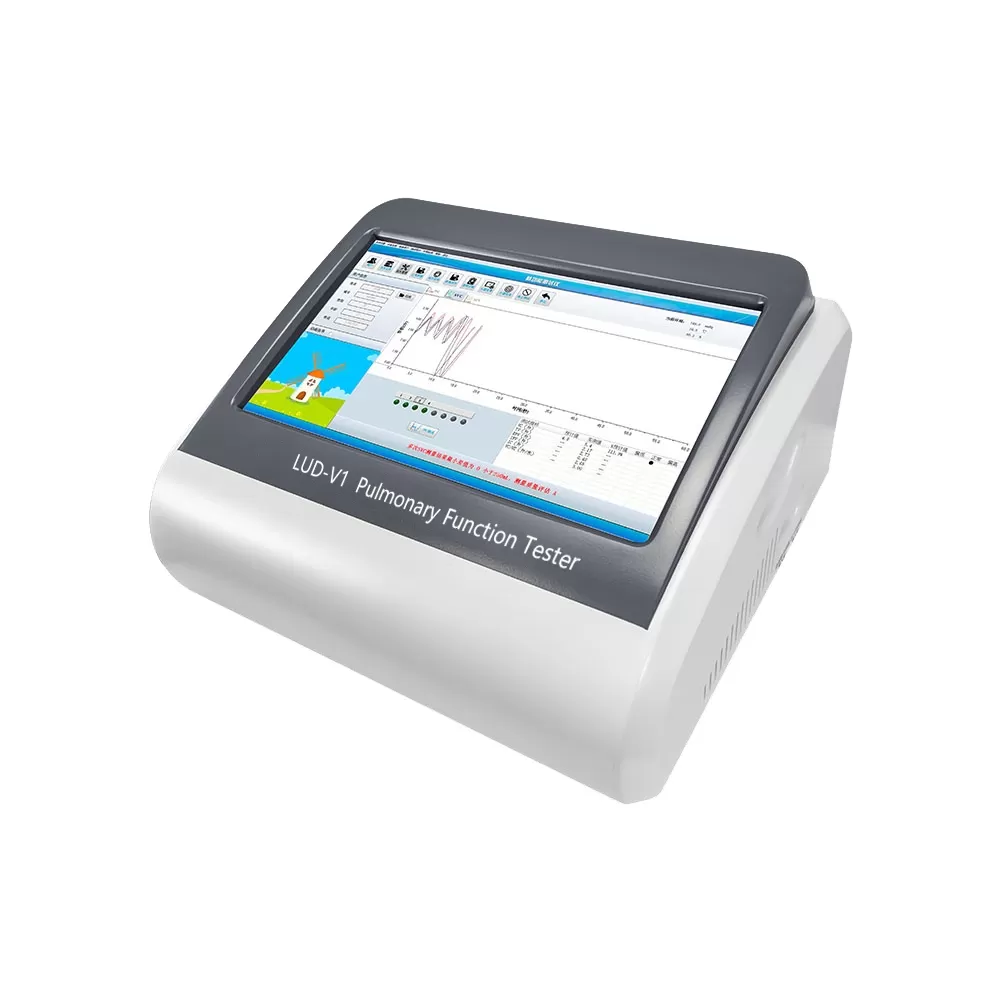
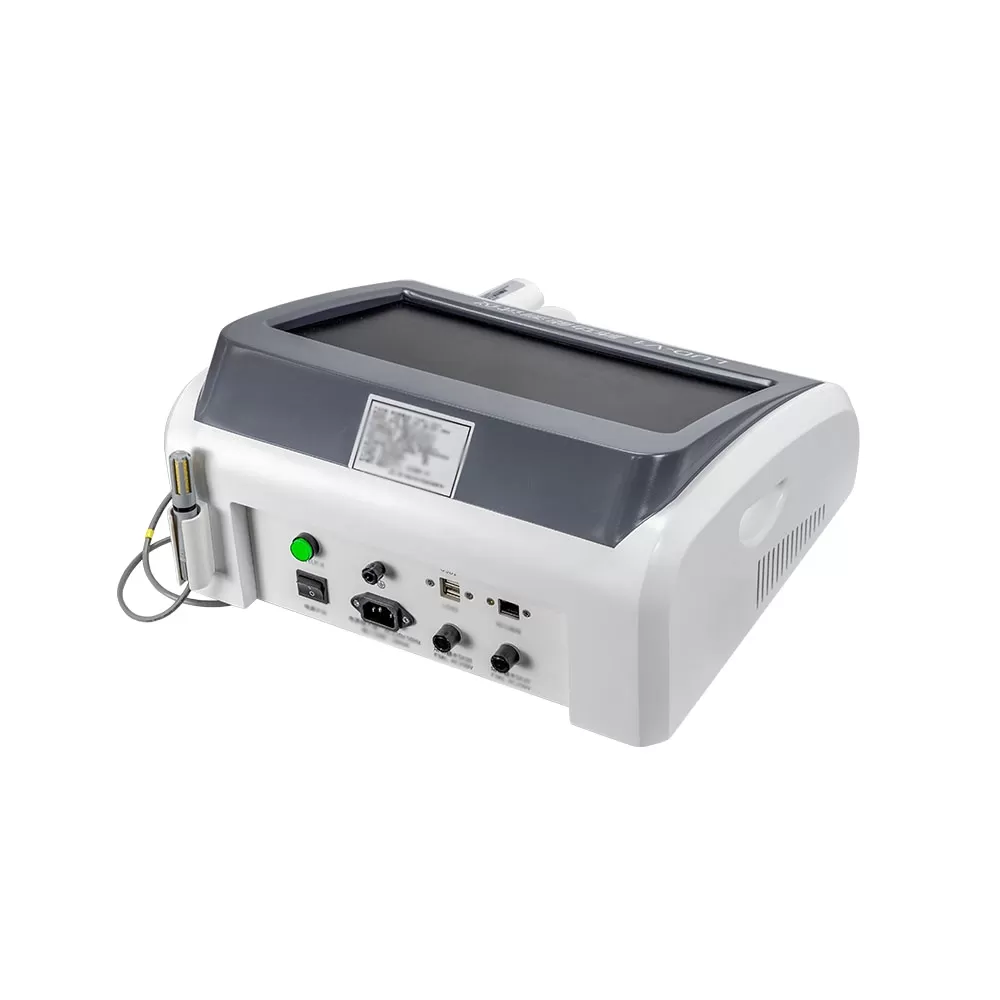

LUD-V1 portable pulmonary function tester specification
The pulmonary function tester we developed and produced use the most advanced differential pressure flow sensor to obtain the measured results, through three measurement methods (slow vital capacity (SVC), forced vital capacity (FVC), and voluntary ventilation (MVV)) to get the user's expiratory flow signal , then calculated and evaluated to provide scientific basis for early screening and diagnosis of respiratory diseases such as chronic obstructive pulmonary disease (COPD), emphysema, asthma, etc. This measurement method is more accurate and efficient. More practical.
1. Measurement method: differential pressure flow test method
2. Sensor: High precision double differential pressure flow sensor
3. Flow measurement range: 0L/s ~ ±14L/s
4. Flow measurement error: The maximum allowable flow error in the measurement range should be: ±10L/min (±0.17L/s) or ±5% of the reading
5. Volume measurement range: 0-8 L volume measurement error: ±3% or ±0.050L, whichever is the maximum
6. Airflow resistance: The airflow resistance within the test range should not exceed 0.35KPa/ (L/s)
7. Frequency response: no more than 0.25L/s or 12%
8. Linearity: the difference of the average error of two adjacent test flows does not exceed 5% of the two test flows, and the test flow change does not exceed 0.17L/S or 5% of the reading
9. Pulmonary function measurement: forced vital capacity (FVC), slow vital capacity (SVC), and voluntary ventilation (MVV) can be measured.
10. Lung function measurements were guided by animation.
11,Measurement parameters:FVC,FEV0.5,FEV1,FEV3,FEV1/FVC,PEF,MEF75,MEF50,MEF25,MMF, OI,FIVC,PIF,FIV1;VC,TV,ERV,IRV,IC,VC/HT;MVV,RR,MVV/BSA,TV,BSA .
12. Volume-flow velocity curve and time-volume curve were generated according to the pulmonary function measurement results.
13. Unique filter and mouth design, more tightness, prevent air leakage during measurement.
14. It has the function of COPD assessment and ventilation defect assessment.
15. System software functions: instrument zero and calibration function, doctor management system, history review system, medical record review function, user file management function.
16. Display: ≥14.1 inch, high-definition color display.
17 Built-in industrial control host structure, more stable performance.
18. Logitech wireless keyboard and mouse operation, more convenient to use.
19. Portable horizontal structure, exquisite and beautiful.
20. Service life: 8 years.
21. Operating system: WIN7 32 bit /64 bit, WIN10 64 bit compatible.
22. Power input: voltage AC220V, Electric current 0.75A, electric power <=60VA.
23. Dimensions: Depth 226mm× width 400mm× height 353mm, Weight: <=8kg.
After-Sales Service
The manufacturer provides one year warranty.
When providing permanent maintenance service outside the warranty period, only materials and maintenance fees will be charged, and labor fees will not be charged.
The manufacturer provides 2 hours immediate response, 48 hours to solve the fault service.
FAQs for LUD-V1 Portable Pulmonary Function Tester
1. How does a portable device like the LUD-V1 compare in accuracy to large, non-portable lab spirometers?
The LUD-V1 uses a high-precision double differential pressure flow sensor, the same core technology found in many advanced clinical spirometers. Its measurement error margins (e.g., volume error of ±3% or ±0.050L) meet rigorous standards, ensuring diagnostic-grade accuracy suitable for early screening and monitoring in a portable format.
2. What is the key advantage of measuring FVC, SVC, and MVV?
These three methods provide a comprehensive view of lung function. FVC is the gold standard for diagnosing obstructive diseases like COPD and asthma. SVC offers a better assessment for patients with severe airway obstruction who cannot perform a forced maneuver. MVV evaluates overall respiratory muscle strength and endurance. Together, they give a fuller clinical picture than a single test.
3. How do I know if the device is calibrated correctly, and how often should it be calibrated?
The device features built-in software for zero-point calibration, which should be performed daily before use or as per clinic protocol. The system guides the user through this quick process to ensure ongoing accuracy. Annual professional verification is recommended.
4. Is the device suitable for home use by patients, or is it strictly for clinical professionals?
While designed for professional use in clinics, mobile health units, or physician offices, its guided animations and simple operation make it suitable for technicians and nurses. It is not typically intended for unsupervised patient home use due to the need for proper maneuver coaching and result interpretation.
5. How hygienic is the testing process, especially the mouthpiece?
The device uses unique, disposable filters that attach to the mouthpiece. This design prevents cross-contamination by blocking moisture and particles from entering the tubing. A new, single-patient filter should be used for every test.
6. Can it connect to my existing Electronic Medical Record (EMR) or hospital management system?
Yes, the device includes patient file management, history review, and data export functions. Test results and curves can be exported, typically via USB or network connection, for integration into most health information systems, though specific interface compatibility should be confirmed with your IT provider.
7. What makes it "portable," and how is its battery life?
The LUD-V1 is a compact, all-in-one unit (8kg) with a built-in industrial computer and display. Please note, the provided specifications list an AC power input. For true portability away from power outlets, you must confirm with the manufacturer if an external battery pack option is available, as the current specs do not mention an internal battery.
8. How reliable is its COPD assessment feature?
The assessment is based on standard spirometric measurements (especially the FEV1/FVC ratio) following widely accepted clinical guidelines (like GOLD criteria). It provides a valuable screening and indicator, but a formal diagnosis should always be confirmed by a physician alongside clinical evaluation and other tests.
9. What operating systems are compatible, and are software updates included?
The system runs on a built-in industrial PC compatible with Windows 7/10. The manufacturer typically provides software updates during the warranty period to improve functionality or add parameters. Support for future operating systems should be inquired about for long-term use.
10. What happens after the 1-year warranty? What does "permanent maintenance" involve?
After the warranty, the manufacturer offers paid maintenance covering parts and repairs at a cost, with no labor charges. The "2-hour response, 48-hour resolution" service level is typically a target for critical support; response times for non-warranty service may vary.
11. How durable is the device, and what is its expected lifespan in a busy clinic?
Built with an industrial-control host and rated for an 8-year service life, it is designed for durability in clinical environments. The flow sensor is robust but should be handled according to the manual to protect it from physical damage or moisture.
12. Can I print reports directly from the device?
The system generates comprehensive reports and curves on-screen. For printing, it would typically require connection to a compatible external printer via USB or network, as a built-in printer is not specified in the parameters.
