
COC/COP (with Fixed Needle)

Overview
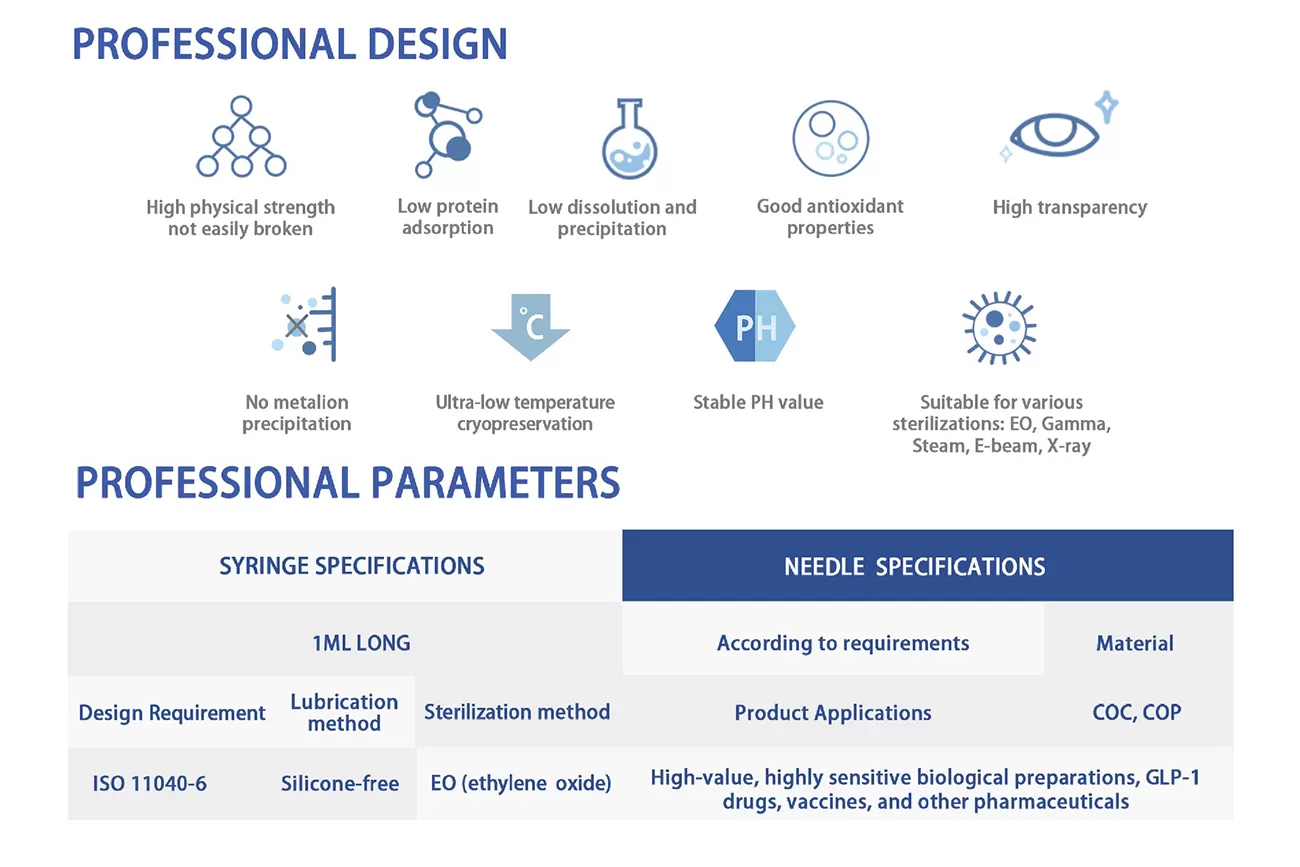
● High Physical Strength
● Low Protein Adsorption
● Low Dissolution and Precipitation
● Good Antioxidant Properties
● Ultra-Low Temperature Cryopreservation
● Suitable For Various Sterilizations: EO, Gamma, Steam, E-Beam, X-Ray
Product Features
Intended use: High-value, highly sensitive biological preparations, medical aesthetic products (such as sodium hyaluronate), ultra-low temperature frozen drugs, ophthalmic injections, etc
Product Introduction
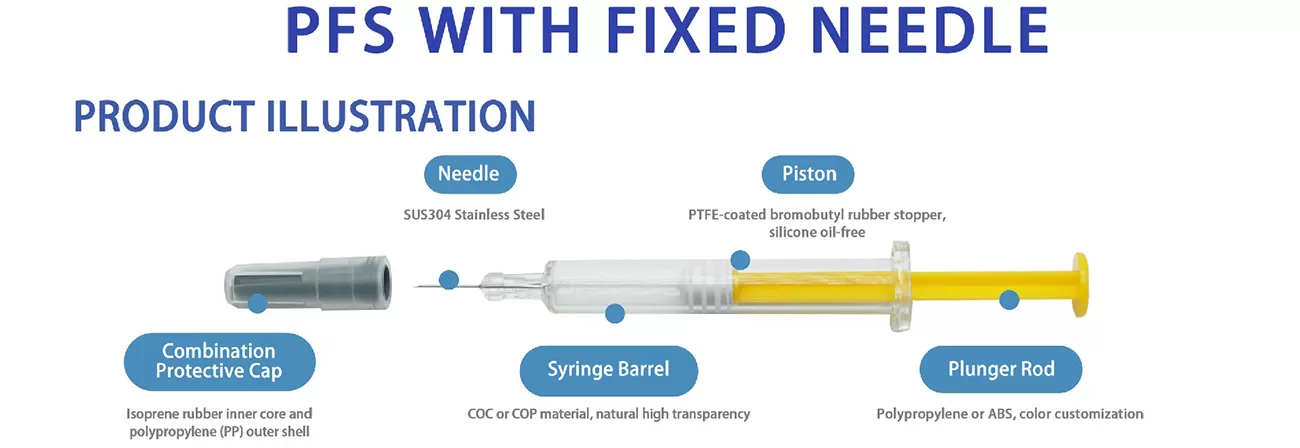
Quality Assurance
The quality system complies with the requirements of the " Good Manufacturing Practice for Pharmaceutical Packaging Materials" (Draft for Comments). The raw materials comply with USP Class Vl and 1s010993 requirements. Bacterial endotoxin meets the requirements for injection water (<0.25 EU/ml). Insoluble particles comply with the " Chinese Pharmacopoeia." Using robotic intelligent assembly to minimize production steps, reduce contact between products, and
decrease contamination.
100% Visual System lnspection: The fully automated production line under Class 100 laminar flow protection is equipped with a dedicated camera online inspection system. This system performs fully automated visual inspection of the inner and outer walls of syringes and Luer locks, capable of identifying injection molding defects and foreign objects, and automatically removing them.
FAQ (Frequently Asked Questions):
Q: What is a COC/COP syringe?
A: It is a prefillable syringe made from advanced Cyclic Olefin Copolymer (COC) or Cyclic Olefin Polymer (COP) materials, offering exceptional clarity, chemical resistance, and mechanical strength for high-value pharmaceutical applications.Q: What are the key physical properties of these syringes?
A: They feature high physical strength, good antioxidant properties, and suitability for ultra-low temperature cryopreservation, maintaining integrity even under extreme storage conditions.Q: How does low protein adsorption benefit sensitive biologics?
A: Low protein adsorption ensures that valuable protein-based drugs (like monoclonal antibodies, vaccines) do not stick to the syringe walls, maintaining full potency and accurate dosing.Q: What does "low dissolution and precipitation" mean?
A: It means the syringe material releases almost no extractables or leachables into the drug product, ensuring purity and stability of sensitive formulations.Q: What sterilization methods are compatible with these syringes?
A: They are suitable for various sterilization methods including Ethylene Oxide (EO), Gamma radiation, Steam (autoclave), Electron Beam (E-Beam), and X-Ray, offering flexibility in manufacturing.Q: What are the intended applications for this product?
A: They are designed for high-value, highly sensitive biological preparations, medical aesthetic products (such as sodium hyaluronate fillers), ultra-low temperature frozen drugs, and ophthalmic injections.Q: What quality standards do these syringes meet?
A: Raw materials comply with USP Class VI and ISO10993 requirements for biocompatibility. The quality system follows GMP for pharmaceutical packaging materials.Q: What is the endotoxin level?
A: Bacterial endotoxin meets the requirements for injection water (<0.25 EU/ml), ensuring safety for direct parenteral administration.Q: How are insoluble particles controlled?
A: Insoluble particles comply with Chinese Pharmacopoeia standards, ensuring cleanliness and safety for injectable drugs.Q: How are these syringes manufactured to ensure cleanliness?
A: They are assembled using robotic intelligent systems under Class 100 laminar flow protection, minimizing human contact and reducing contamination risks during production.Q: What inspection processes are in place?
A: A 100% visual system inspection is performed using dedicated camera online systems under laminar flow. This automated inspection checks inner/outer walls and luer locks for defects and foreign objects, automatically rejecting non-conforming units.Q: Are these syringes suitable for ophthalmic use?
A: Yes, they are specifically indicated for ophthalmic injections due to their high clarity, low particle levels, and excellent biocompatibility.Q: Can these syringes be used for cryopreservation?
A: Absolutely. They are designed for ultra-low temperature cryopreservation, maintaining structural integrity and performance even at very low temperatures.Q: What is the shelf life?
A: While not specified in the overview, COC/COP syringes typically offer extended shelf life due to material stability. Please contact us for specific shelf life information.Q: Are these syringes compatible with automated filling lines?
A: Yes, they are designed for compatibility with standard prefillable syringe filling equipment used in pharmaceutical manufacturing.Q: What is the advantage over glass syringes?
A: COC/COP syringes offer superior break resistance, lower protein adsorption, no risk of delamination, and consistent dimensional tolerances compared to glass.Q: Are there different tip configurations available?
A: While the overview mentions luer locks, specific tip configurations (luer slip, luer lock, etc.) can be discussed based on application requirements.Q: How should these syringes be stored before filling?
A: They should be stored in clean, controlled environments following the manufacturer's recommendations to maintain cleanliness and readiness for aseptic filling.Q: What sizes are available?
A: While not specified in this overview, COC/COP syringes typically come in various sizes. Please contact us for available volume ranges.Q: What documentation is provided for regulatory submissions?
A: Comprehensive regulatory support files, including biocompatibility testing, extractables/leachables data, and validation documentation, are available to support customer drug submissions.


