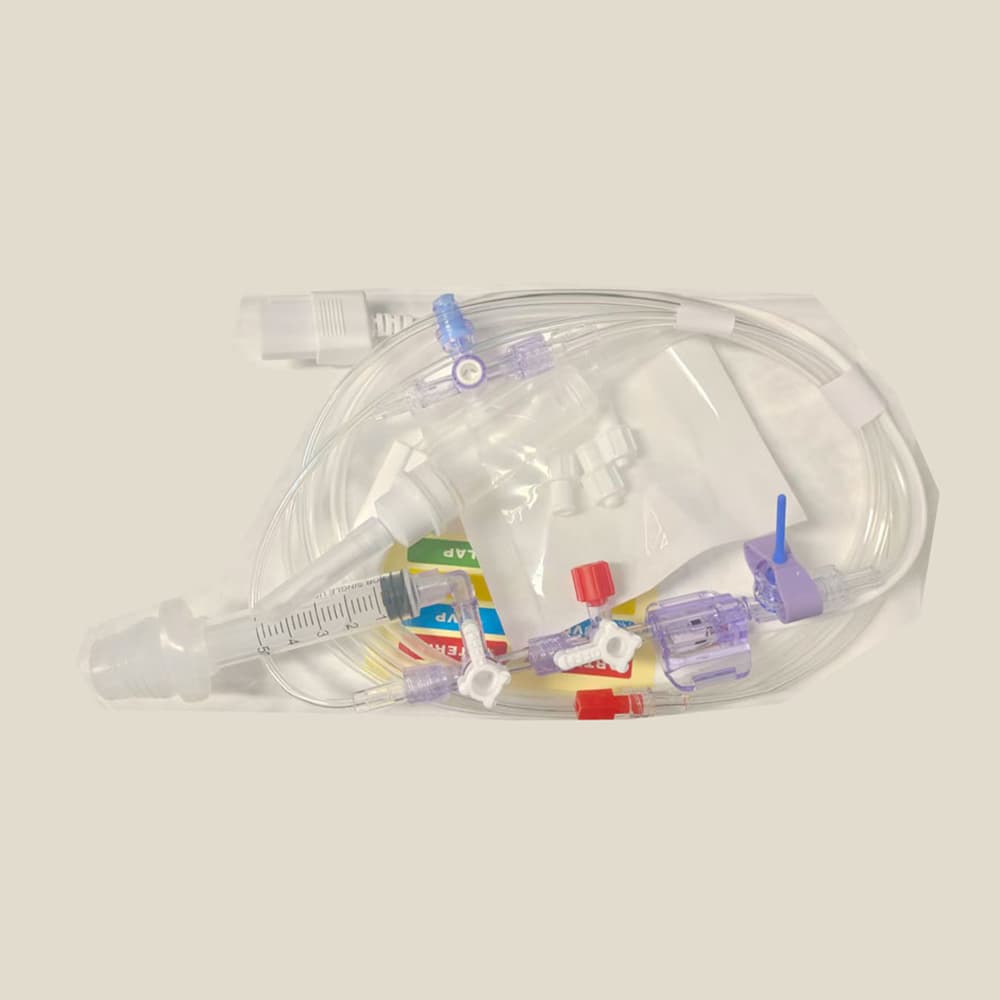
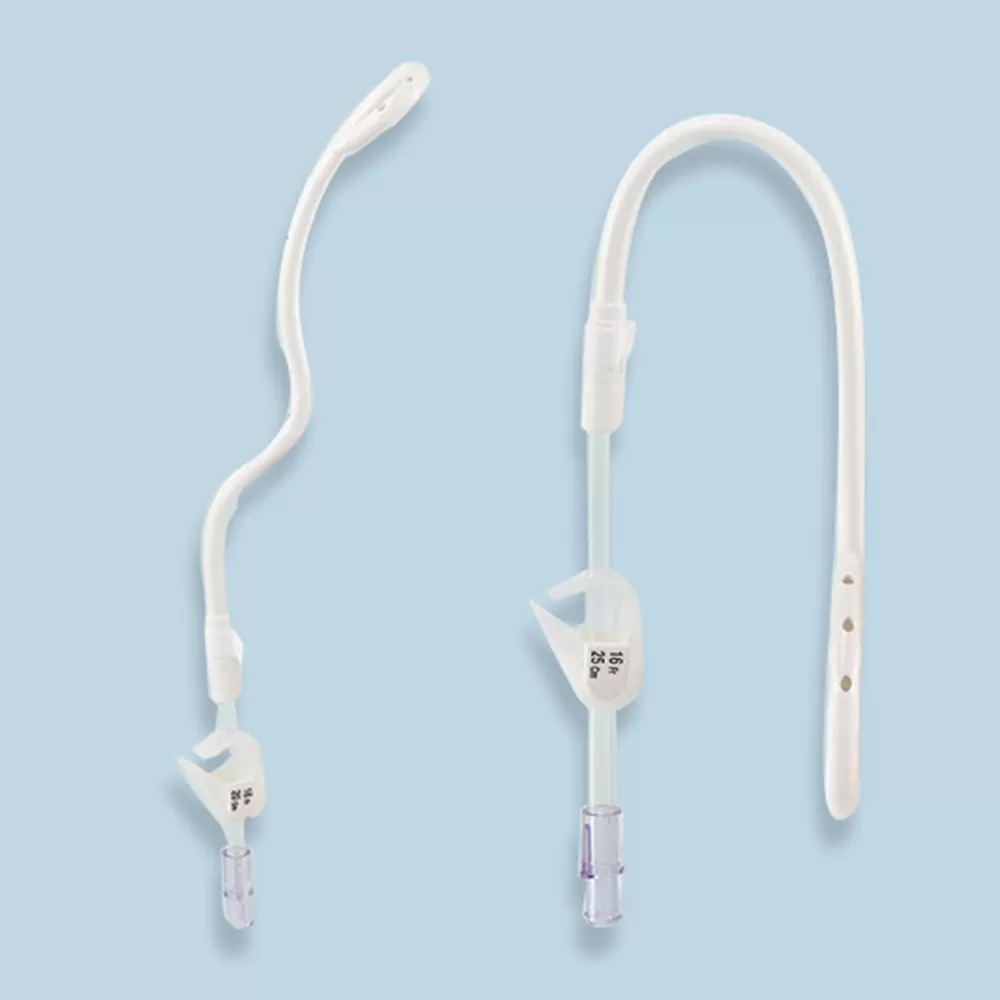
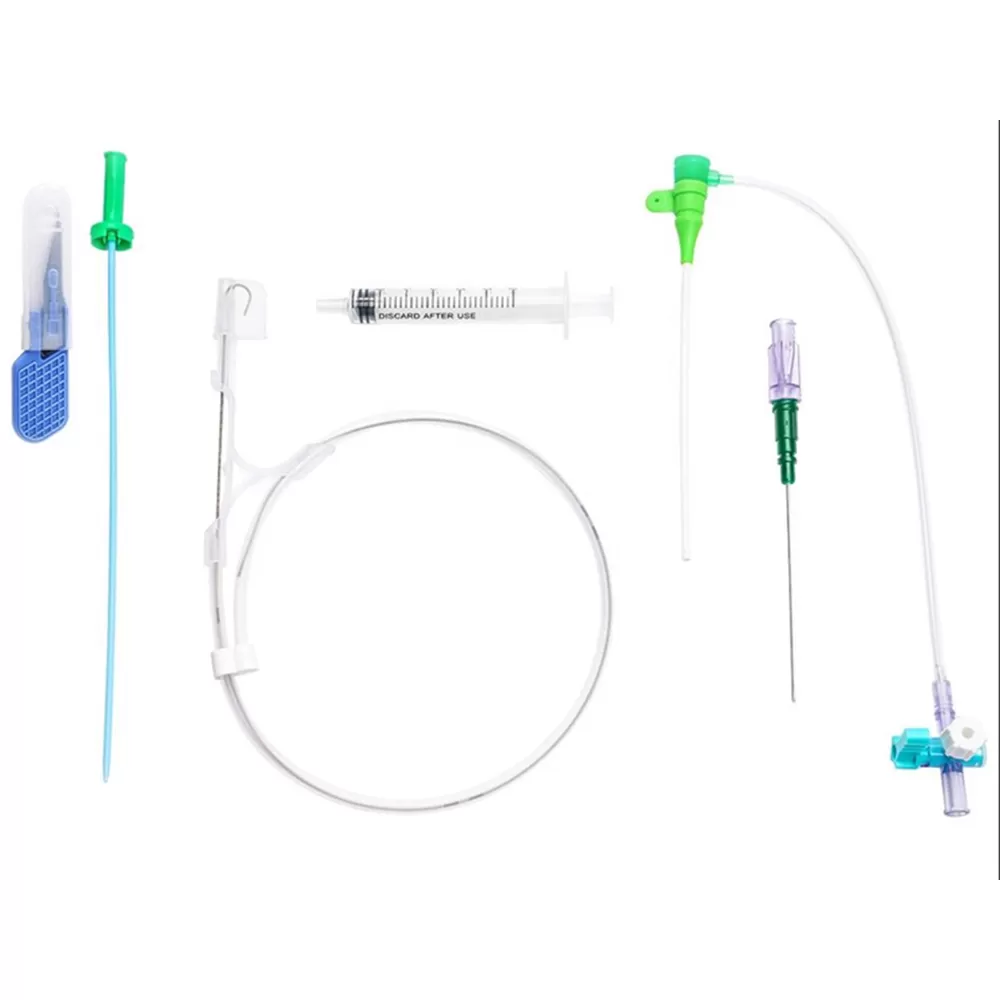
Central Venous Catheter for Anesthesia
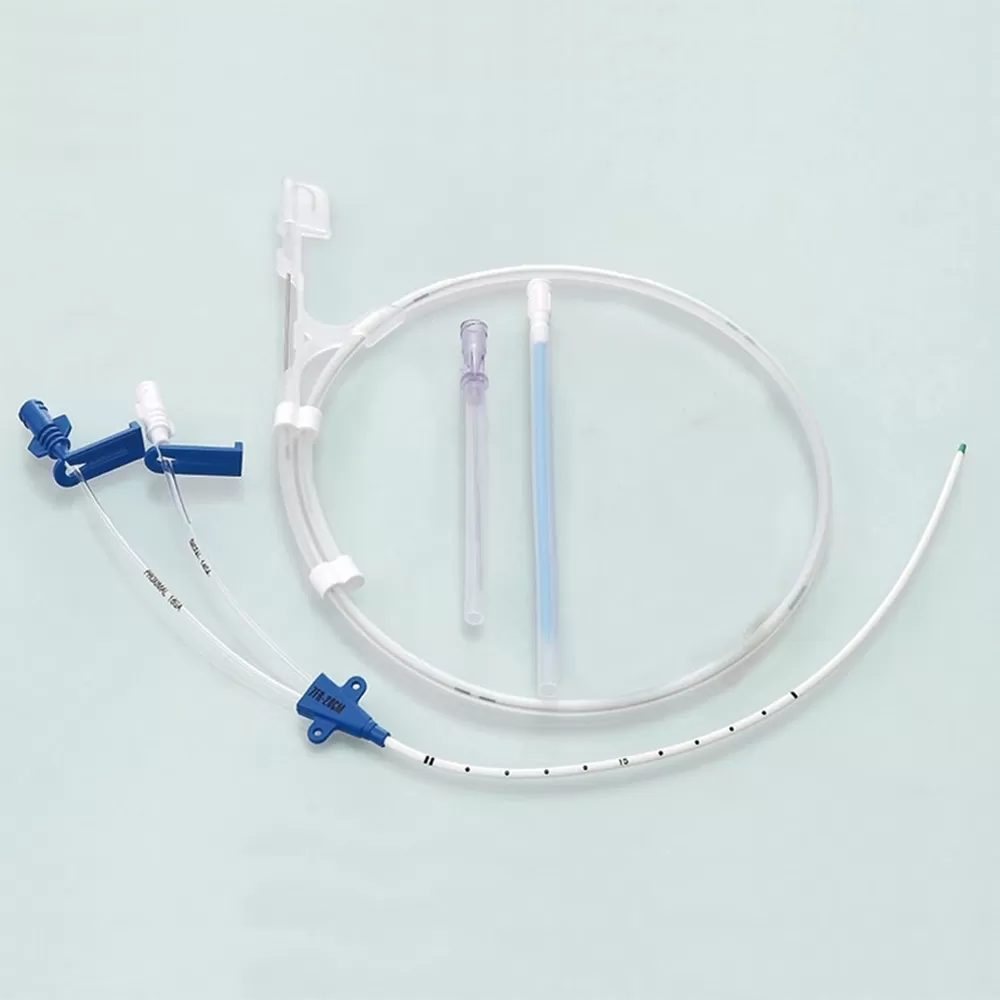
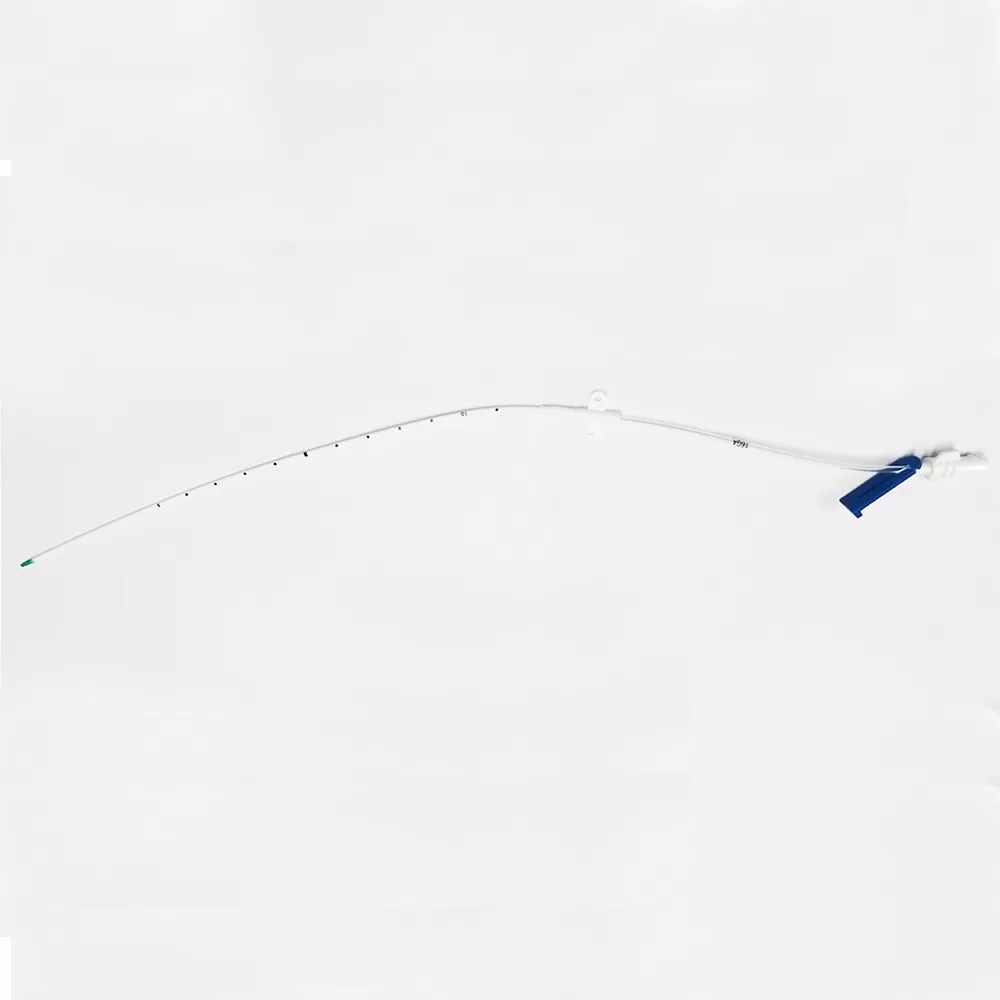


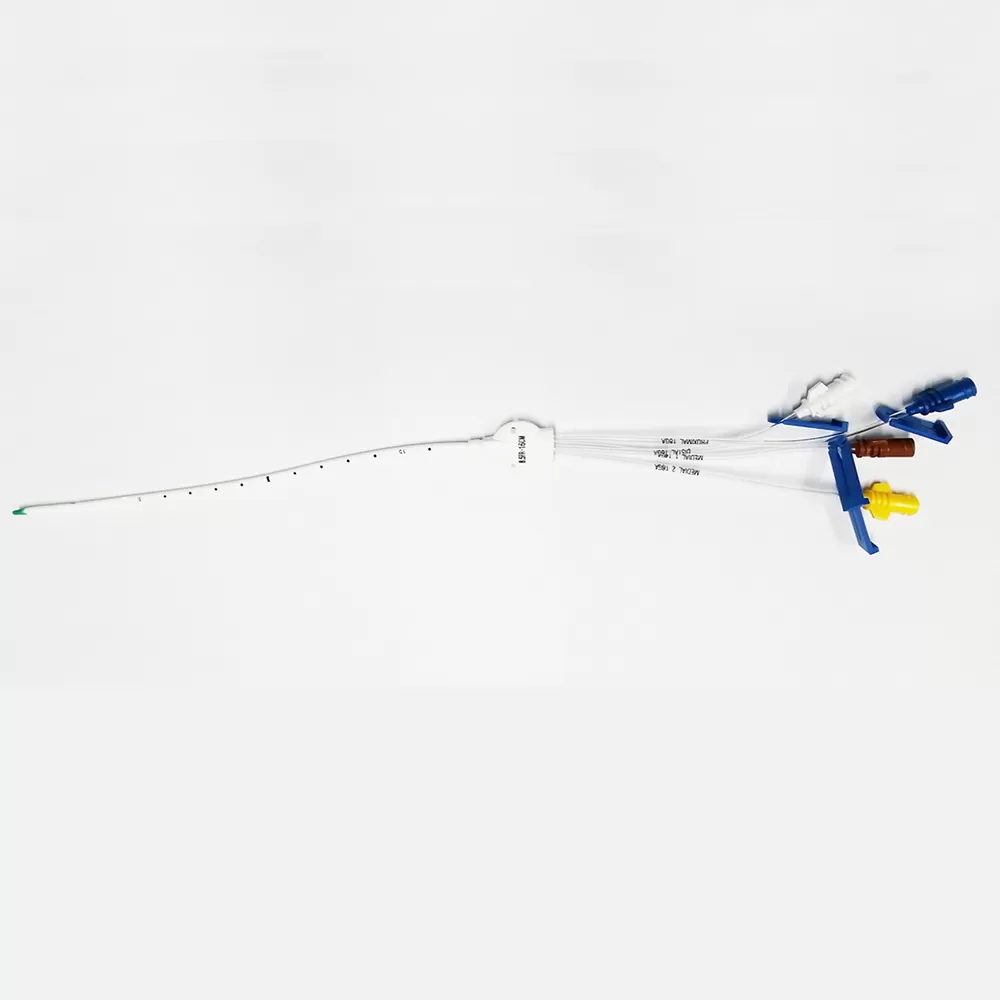
Central Venous Catheter Kit |
Antimicrobial Central Venous Catheter Kit |
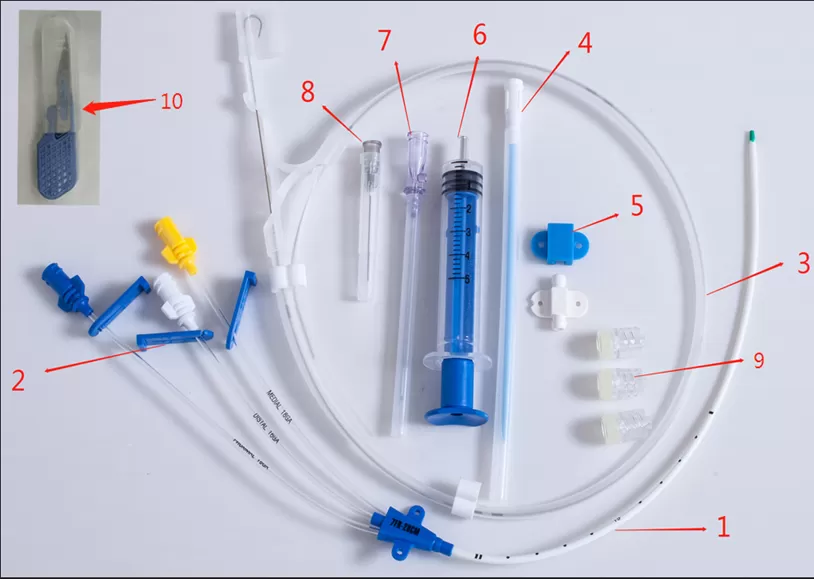
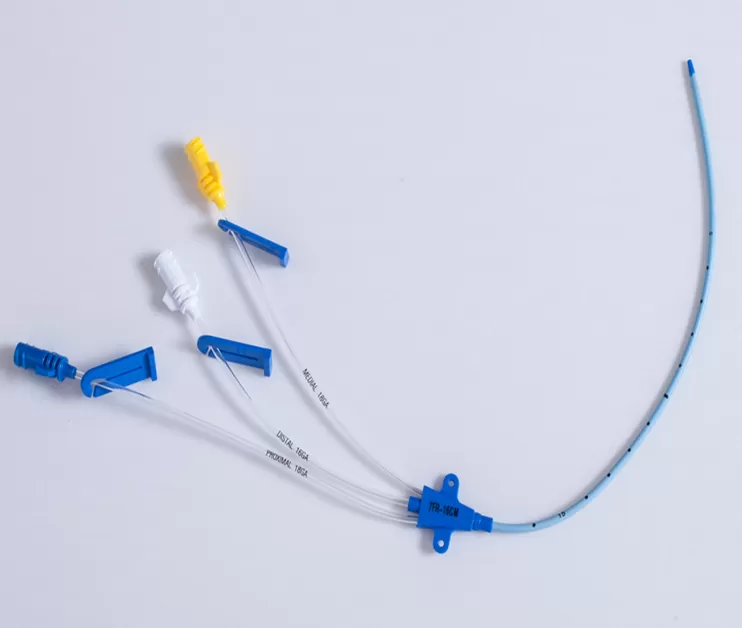
Intended Use and Indication
Intended Use:
The Central Venous Catheter Kit is used for providing vascular access.
The Catheter is surgically penetrated at three optional puncture points depending on the clinical requirement with the Seldinger Technique. The Insertion Sites could be :
- Internal jugular vein;
- Subclavian vein;
- Femoral vein.
Indication:
The CVC Kit may be applicable to one of the following therapies:
- Monitor of central venous pressure;
- Continuous or discontinuous venous infusion;
- Blood sampling or blood transfusion.
Note:The catheter is intended for children, adolescents, and adults.
Warnings and Precautions
Warnings:
1. The catheter is to be inserted and removed only by a suitably qualified physician or nurse;
2. The clinical benefit of the use of CVCs must be evaluated against the recognized risks and complications of the procedure.
3. Do not use if the packaging has been previously opened or damaged, or ifany part of the catheter is missing or damaged.
4. Observe aseptic technique at all times when handling the catheter and/or the insertion components and in accordance with standard hospital protocols.
5. Some disinfectants used at the catheter insertion site contain solvents that can weaken the catheter material. Alcohol, acetone, and polyethylene glycol can weaken the structure of polyurethane materials. These agents may also weaken the adhesive bond between the catheter stabilization device and skin. It is recommended to use Chlorhexidine with Alcohol (CHG-Alcohol) as the preferred disinfectant for skin disinfection and catheter maintenance during central venous catheterization.
WARNING: Do not use acetone on the catheter surface. Do not use alcohol to soak the catheter surface or allow alcohol to dwell in a catheter lumen to restore catheter patency or as an infection prevention measure. Do not use polyethylene glycol-containing ointments at the insertion site. Take care when infusing drugs with a high concentration of alcohol. Allow the insertion site to dry completely before skin puncture and before applying the dressing.
6. Do not apply undue force on the guidewire to minimize the risk of possible breakage.
7. Do not apply excessive force in removing the guidewire or catheter. If withdrawal cannot be easily accomplished, a visual image should be obtained and further consultation requested.
8. Do not resterilize.
9. Do not re-insert a partially or completely withdrawn needle.
10. Do not use for high-pressure infusion.
11. It is prohibited to use haemostatic forceps to clamp the extension tubes and hubs.
12. In case of thrombus in the lumen, rinse by force is not allowed; try to suck the clog by syringe first, if it doesn’t work, use blood clot dissolver.
WARNING: Only anexperienced physician is allowed.
13. Any serious incidents related to the device should be reported to the competent authorities of the member states where the manufacturer, user, and/or patient are located.
14. Do not reuse. The physical integrity and performance of the device may be compromised if reused. Reusing poses risks, including but not limited to: Causing infection; if serious, it may result in death; the needle tube and dilator may become blunt, leading difficulties in catheterization; decreased catheter flowrate; device blockage or leakage; damage to the surface of the device causes vascular injury, etc.
Precautions:
1. Confirm the position of the catheter tip by X-ray.
2. Use only aluer lock (threaded) connector and syringes with the catheter, and do not over-tighten.
3. Insert the guidewire into the blood vessel from the flexible end.
4. Please avoid damaging the catheter or personnel with sharp tools (including scalpel, needles, etc).
5. The catheter can tolerate 300kPa positive pressure and 80kPa negative pressure. It is not indicated for power injection.
6. The catheter does not contain any additives or coatings.
7. The intended usage time of the injection cap shall not exceed 24 hours.
8. The central venous catheter is MRI safe, whichdoes not contain any metal components.
Contraindications and Complications
Contraindications:
1. Hypersensitivity to device materials.
2. Infection or a cut wound around the puncture area.
3. Dysfunction of blood coagulation.
4. During the anticoagulant treatment.
5. Symptoms of inadaptability to puncture operation, such as Pneumothorax, venous sclerosis.
6. Abnormal or unclear anatomical situation at the penetration area, such as severe emphysema, or obvious inadaptability from a previous operation.
Complications:
The clinical benefit of the use of CVCs must be evaluated against the recognized risks and complications of the procedure, which include, but are not limited to:
1. Infection, necrosis of the puncture point
2. Extravasation injury
3. Bleeding/hematoma
4. Air embolism
5. Cardiac arrhythmia
6. Thrombus
7. Pneumothorax
8. Arterial puncture
9. Hemothorax
10. Occlusion
Order Information
Number of Lumen | O.D. | Effective Length/cm | |
Ga / Fr | mm | ||
Single | 14Ga | 2.00 | 10, 13, 15, 16, 20, 25, 30, 40, 45, 60 |
16Ga | 1.70 | 10, 13, 15, 16, 20, 25, 30, 40, 45, 60, 80 | |
18Ga | 1.40 | 5, 6, 8, 10, 13, 15, 16, 20, 25, 30, 40, 45, 60 | |
20Ga | 1.15 | 5, 6, 8, 10, 13, 15, 16, 20, 25, 30, 40, 45, 60 | |
22Ga | 0.90 | 5, 6, 8, 10, 13, 15, 16, 20, 30, 40, 45, 60 | |
24Ga | 0.65 | 5, 6, 8, 9, 10, 13, 15, 16, 20, 25, 30, 40, 45, 60 | |
Double | 4Fr | 1.40 | 5, 6, 8, 10, 12, 13, 15, 16, 20, 25, 30, 40, 45, 60 |
5Fr | 1.70 | 5, 6, 8, 10, 12, 13, 15, 16, 20, 25, 30, 40, 45, 60 | |
7Fr | 2.40 | 5, 8, 10, 13, 14, 15, 16, 20, 25, 30, 35, 40, 45, 60 | |
8Fr | 2.70 | 10, 13, 15, 16, 20, 25, 30, 40, 45, 60 | |
8.5Fr | 2.85 | 10, 13, 15, 16, 20, 25, 30, 40, 45, 60 | |
Triple | 4Fr | 1.35 | 4, 5, 6, 8, 10, 12, 13, 15, 16, 20, 25, 30, 40, 45, 60 |
4.5Fr | 1.50 | 5, 6, 8, 10, 12, 13, 15, 16, 20, 25, 30, 40, 45, 60 | |
5Fr | 1.70 | 5, 6, 8, 10, 12, 13, 15, 16, 20, 25, 30, 40, 45, 60 | |
5.5Fr | 1.85 | 5, 6, 8, 10, 12, 13, 15, 16, 20, 25, 30, 40, 45, 60 | |
6Fr | 2.00 | 5, 6, 8, 9, 10, 12, 13, 15, 16, 20, 25, 30, 40, 45, 60 | |
7Fr | 2.40 | 5, 8, 10, 12, 13, 15, 16, 20, 25, 30, 40, 45, 60 | |
7.5Fr | 2.50 | 10, 12, 13, 15, 16, 20, 25, 30, 40, 45, 60 | |
8.5Fr | 2.85 | 10, 13, 15, 16, 20, 25, 30, 40, 45, 60 | |
Quad | 8.5Fr | 2.85 | 10, 13, 15, 16, 20, 25, 30, 40, 45, 60 |
Note:
1. OD of 20Ga, 22Ga, 24Ga, 4Fr and 4.5Fr are intended for children (< 9 years old) use.
2. OD of 18Ga, 5Fr and 5.5Fr are intended for adolescents (9 ~ 18 years old) use.
3. The flow rate of the catheter can be found in the Instruction for Use of the product or via consulting the sales representative.
4. The major components of the product package include central venous catheter, guidewire, dilator and puncture needle, etc.
For more information, please contact email: info@newmeen.com
Device Lifetime
Lifetime:
It is possible to be inserted inside the body for no more than 30 days. If the duration exceeds 30 days, it may cause the risk of combining the catheter and the inside tissue, which results in a serious incident. It is not recommended to use the product for more than 30 days. The Central Venous Catheter Kit is not directly involved in the treatment of the disease.
SSCP
Link to product's SSCP
FAQs:
Q1: Is this product manufactured under a certified quality system?
A: Yes. Our production facility holds ISO 13485 and ISO 9001 certifications, and over 20 of our products, including Central Venous and Hemodialysis Catheters, carry the CE mark. Select products are also cleared for marketing in the USA.
Q2: Who is the manufacturer, and what is its scale?
A: The product is manufactured by Bgihe, recognized as China's largest producer in terms of production capacity for Central Venous and Hemodialysis Catheters.
Q3: For how long can the catheter safely remain in a patient?
A: The catheter is intended for indwelling use for no more than 30 days. Use beyond this period increases the risk of complications, such as tissue adhesion.
Q4: Is the catheter safe for use with MRI scans?
A: Yes. The central venous catheter is MRI safe as it contains no metal components.
Q5: What are the critical warnings regarding disinfectants?
A: Do not use acetone, alcohol, or polyethylene glycol-based agents on the catheter, as they can weaken the polyurethane material. Chlorhexidine with Alcohol (CHG-Alcohol) is the recommended disinfectant for skin prep and maintenance.
Q6: Can this catheter be used for power injection (e.g., CT contrast)?
A: No. The catheter is not indicated for power injection. It tolerates a maximum of 300 kPa positive pressure and 80 kPa negative pressure.
Q7: How do I select the correct size for pediatric patients?
A: Please refer to the sizing table. For example, catheters with an Outer Diameter (O.D.) of 20Ga, 22Ga, 24Ga, 4Fr, and 4.5Fr are intended for children under 9 years old.
Q8: What should I do if the catheter lumen becomes occluded?
A: Do not rinse by force. First, try to aspirate the clot with a syringe. If unsuccessful, use a blood clot dissolver. Only an experienced physician should perform this maneuver.
Q9: What is the maximum usage time for the injection cap?
A: The injection cap should be replaced at least every 24 hours.
Q10: What are the absolute contraindications for use?
A: Key contraindications include: 1) Hypersensitivity to device materials, 2) Infection at the puncture site, 3) Blood coagulation dysfunction, and 4) Conditions like pneumothorax or venous sclerosis.
Q11: What is the sterilization method, and can the device be resterilized?
A: All products are sterilized using Ethylene Oxide (EO). Do not resterilize the device, as reuse compromises integrity and poses severe infection risks.
Q12: Where can I find the full pressure ratings and flow rates?
A: Detailed flow rate information and complete specifications can be found in the product's Instruction for Use (IFU) or by consulting your sales representative.